
Equipment Dealer and Rental Process Management: How Modern Platforms Can Help Remove the Friction That Erodes Profitability
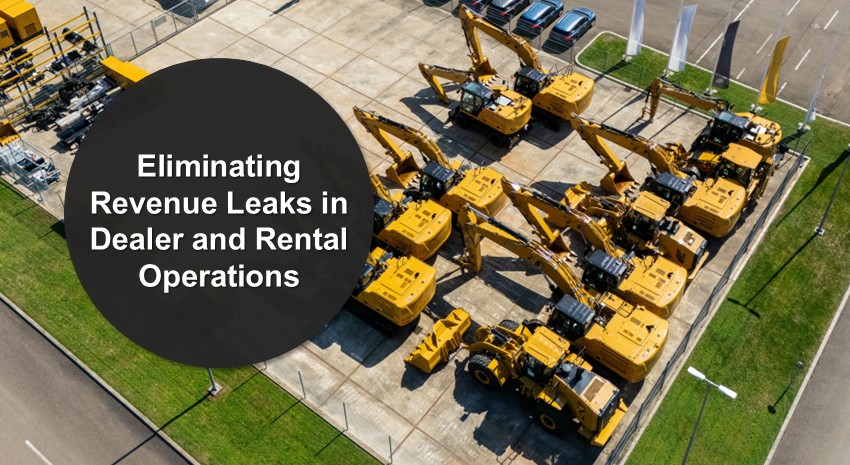
Equipment dealers and rental companies rely on a combination of systems to manage sales, rentals, service, and parts—but many are still operating without a fully integrated dealership management system or modern equipment rental management software.
Why dealership management systems and equipment rental management software matter more than ever
As operations grow more complex, disconnected tools create inefficiencies that are hard to detect but expensive to ignore. Revenue leakage, poor visibility, underutilized assets, and inconsistent processes often stem from systems that were never designed to work together.
This is especially true for multi-branch organizations managing high-value equipment across rental, sales, and service lines. What worked at a smaller scale begins to break down as operational complexity increases.
The complexity challenge in dealer and rental operations
Equipment dealer and rental, sales, and service businesses rarely fit neatly into a single operational box. An organization might sell new equipment, rent short- and long-term assets, provide field service and maintenance, manage large parts inventories, and operate across multiple branches or regions. Each of those activities introduces its own workflows, data requirements, and financial implications.
Historically, many companies have addressed this complexity by layering systems on top of one another. A legacy ERP handled accounting. A rental module or third-party tool tracked contracts. Service teams relied on separate systems or spreadsheets. Inventory lived somewhere else entirely. Over time, these disconnected systems became “good enough” simply because they were familiar.
The problem is that what once worked at a smaller scale breaks down as volume, asset count, and customer expectations increase. Too often, leadership teams realize this breakdown is occurring only after it has started affecting profitability.
The visibility gap in disconnected dealership management systems
One of the most common frustrations among dealer and rental executives is the inability to see what is actually happening across the business in real time. Leaders know revenue is coming in and costs are going out, but understanding why performance looks the way it does is far more difficult.
Questions that should be simple to answer often require manual effort, reconciliation, or delayed reporting. Executives want to know which assets are underutilized, which branches are driving margin, where service backlogs are forming, and how rental performance compares across regions. Instead, they are handed reports that are already outdated by the time they are reviewed.
This lack of visibility is rarely caused by a lack of data. Dealer and rental organizations generate enormous amounts of operational information every day. The issue is that the data is scattered across systems that do not speak the same language. When sales, rental, service, parts, and finance each operate in silos, leadership loses the ability to make fast, confident decisions.
A modern dealership management system addresses this by creating a single operational and financial foundation. Instead of relying on after-the-fact reporting, leaders gain access to live, role-specific performance views. The goal is not more dashboards for the sake of dashboards, but to have a shared understanding of what is happening across the organization and where attention is needed most.
How equipment rental management software reduces revenue leakage
Rental revenue leakage is one of the most damaging issues in the industry. It emerges through dozens of small inconsistencies that feel manageable in isolation:
- Equipment might be returned late without triggering additional charges.
- Damage might be noted but never billed.
- Contract terms might be interpreted differently across branches.
- Discounts might be applied manually without clear approval rules.
Over time, these small gaps add up to significant lost revenue.
What makes revenue leakage especially dangerous is that many organizations underestimate its impact. Without a clear way to quantify what is being missed, leaders assume the losses are minimal or unavoidable. In reality, even modest leakage percentages can translate into substantial annual losses for organizations with large fleets.
Modern equipment rental management software reduces leakage by being consistent. Automated contract enforcement, standardized pricing logic, precise time-based billing, and integrated inspection workflows ensure that what should be billed actually is. The result is improved margin protection without sacrificing customer relationships.

Moving from reactive to proactive maintenance with modern systems
Few issues frustrate rental customers more than equipment that is unavailable or unreliable. Downtime directly affects customer trust and repeat business, yet many dealer and rental organizations still operate in a largely reactive maintenance model.
In these environments, service teams are often stretched thin, maintenance schedules are tracked manually, and asset history is fragmented across systems. Equipment is serviced when it fails rather than when data suggests it should be. This approach may feel manageable in the short term, but it inevitably leads to higher repair costs, reduced asset lifespan, and lost rental opportunities.
The most effective dealer management platforms help organizations move along a maintenance maturity curve. Planned maintenance becomes systematic rather than discretionary. Service teams gain visibility into asset usage, service history, and upcoming needs. This shift from reactive to planned maintenance not only improves fleet availability but also fundamentally changes how organizations think about asset value and lifecycle management.
How a dealership management system improves equipment utilization
Equipment utilization sits at the center of rental profitability, yet it is often misunderstood or inconsistently measured. Many organizations track utilization at a high level but struggle to connect it to financial outcomes or operational decisions.
Without clear utilization insight, leaders may hold onto underperforming assets too long, invest in equipment that does not align with demand, or overuse assets without sufficient maintenance planning. Utilization data that lives in isolation rarely drives meaningful action.
When utilization is integrated into a broader dealer management platform, it becomes far more powerful. Leaders can see utilization trends by asset type, branch, customer segment, or contract type. They can connect usage patterns to maintenance costs, downtime risk, and margin performance. This enables more informed decisions about fleet composition, asset redeployment, and capital investment. Utilization stops being a static report and becomes a strategic planning tool.
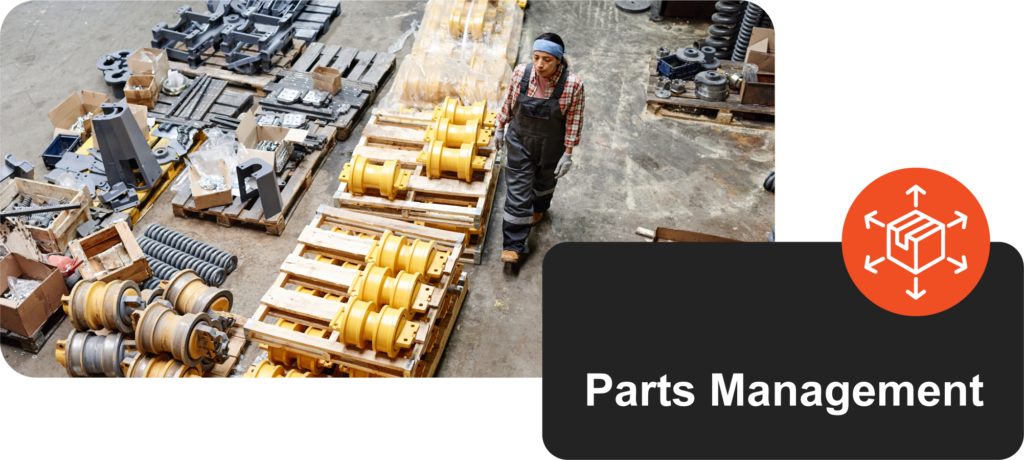
Parts inventory optimization with integrated dealer management systems
Parts management is another area where operational friction quietly erodes performance. Parts departments constantly navigate trade-offs between availability and carrying costs. Overstocking ties up capital and increases the risk of obsolescence, while understocking leads to service delays and emergency purchases.
In many organizations, parts inventory decisions are based on historical habits rather than real usage data. Service teams might not have clear visibility into inventory levels, and inventory planners might not fully understand upcoming maintenance demand.
Integrated dealer management solutions that include parts management connect inventory directly to equipment data and service operations. This alignment allows organizations to forecast demand more accurately based on actual asset usage and maintenance patterns, reduce excess stock, and ensure critical parts are available when needed. Over time, this improves both service efficiency and financial performance.
Scaling multi-branch operations with standardized systems
Growth is often a sign of success, but for dealer and rental organizations, it introduces new challenges. As branches multiply, processes naturally diverge. Local teams develop their own pricing, service, and customer management strategies. While this flexibility can be valuable, it often leads to inconsistency, data quality issues, and governance challenges.
Leadership teams struggle to compare performance across branches or roll out improvements consistently. Training new employees becomes more difficult, and best practices remain isolated rather than shared.
Modern platforms address this by standardizing core processes while still allowing for controlled local variation. Pricing rules, workflows, and data structures are consistent across the organization, making performance easier to measure and improve. At the same time, branch-level nuances can be accommodated without undermining governance. This balance is essential for organizations that want to scale without sacrificing control.
Improving customer experience with connected rental and dealer platforms
Customer expectations in the rental and dealer space have evolved. Customers want fast, accurate quotes, clear availability information, transparent billing, and reliable service timelines. When internal systems are fragmented, delivering a consistent experience becomes difficult.
Delays, errors, and miscommunication are often symptoms of internal complexity rather than poor customer service intent. When sales, rental, service, and billing are not tightly integrated, customers feel the friction immediately.
Dealer management and rental process platforms that unify these functions enable smoother customer journeys. Quotes convert to contracts more quickly. Availability is accurate. Service updates are reliable. Billing aligns with expectations. Over time, this operational excellence becomes a differentiator that drives loyalty and repeat business.
Technology readiness assessments: Know when to upgrade your dealership management system or rental software
Many modernization journeys begin not with a software search but with a realization: Existing systems no longer support the business. Leaders notice that reporting takes too long, manual workarounds are multiplying, and scaling is harder than it should be.
Technology readiness assessments often surface these issues clearly. They reveal where systems are fragmented, where processes are overly manual, and where growth is being constrained. Just as importantly, they help organizations understand what to fix first. For dealer management and rental process companies, these assessments are powerful tools because they align technology conversations with real operational pain rather than a list of features.
From disconnected tools to unified platforms
The most successful dealer and rental organizations are no longer thinking in terms of individual tools. They are investing in platforms that unify operations, finance, assets, and analytics on a shared foundation.
This platform approach enables faster improvements, stronger governance, and better long-term scalability. Instead of constantly integrating new point solutions, organizations build on a core system that evolves with the business. For dealer management and rental process providers, this shift represents both a challenge and an opportunity to move beyond transactional software delivery and become strategic partners in operational transformation.

Choosing the right dealership management system and equipment rental management software
The pressures facing dealer and rental organizations are not going away. Asset costs will continue to rise. Customers will continue to expect more. Competition will continue to increase. What is changing is the ability to address these pressures proactively. Modern dealer management and rental process platforms give organizations the tools to reduce friction, protect margin, and scale with confidence, with features that include:
Unified financials and operations ➜ Brings all core business functions into a single system, eliminating data silos and enabling faster, more accurate decision-making.
Real-time asset tracking ➜ Provides instant visibility into asset location and status, improving utilization, availability, and customer responsiveness.
Automated billing and contract enforcement ➜ Ensures accurate, consistent invoicing by automatically applying contract terms, reducing revenue leakage and manual errors.
Maintenance scheduling and service history ➜ Enables proactive service management by tracking maintenance needs and asset history, reducing downtime and extending equipment life.
Multi-branch support ➜ Standardizes processes across locations while maintaining centralized control, making it easier to scale operations without losing consistency.
Reporting and analytics ➜ Transforms operational data into actionable insights, helping leaders identify trends, optimize performance, and drive profitability.

Take the next step
For companies serving the equipment dealership and rental market, operational excellence becomes a competitive advantage. ArcherPoint specializes in helping equipment dealers and rental companies modernize with Microsoft Dynamics 365 Business Central, unifying rental, sales, service, parts, assets, and financials into one scalable platform. The result is clearer visibility, stronger margin protection, and a foundation built for multi-branch growth.
Let’s evaluate where your current systems stand and identify practical next steps toward operational excellence. Take the Dealer Technology Readiness Assessment or contact ArcherPoint by Cherry Bekaert to learn more.
And be sure to download our white paper, RPM: A Recipe for Success For Dealerships that Rent, Sell, & Service Equipment.
Trending Posts
- Login Error: Communication protocol mismatch between client and server
- How to Make Measures Total Correctly in Power BI Tables
- The Microsoft Technology Stack – What Is It & Why Should You Care?
- MRP vs. MPS: Choosing the Right Planning Approach for Your Manufacturing Business
- Designing a Connected Student Engagement Technology Stack
Stay Informed
Subscribe to Communications
"*required" indicates required fields