
The Benefits of Using an ERP System in Manufacturing
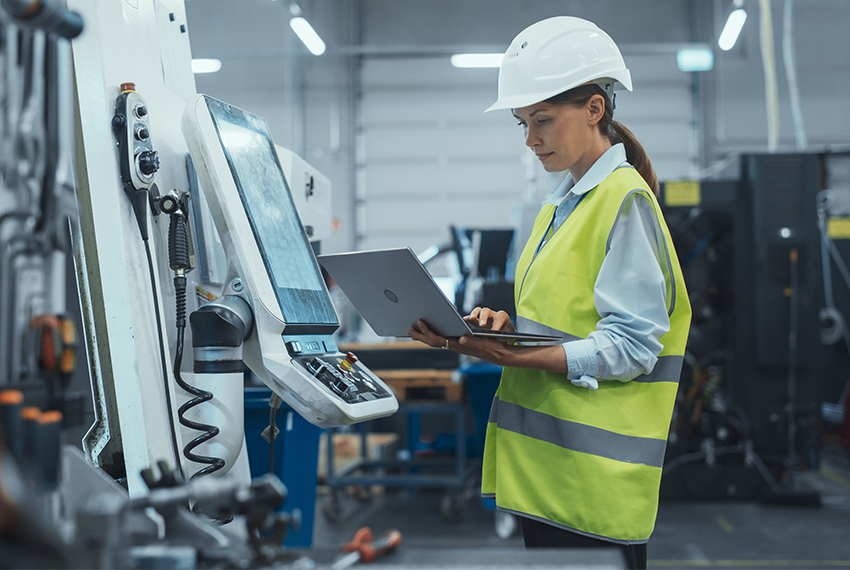
Manufacturing businesses are becoming increasingly complex as they fight to stay competitive. Managing diverse product lines and expanding business functions to support growth often leads to fragmented tools and outdated data, creating significant operational challenges.
To overcome these hurdles, many manufacturers are adopting enterprise resource planning (ERP) systems. An ERP centralizes core business operations by integrating key functions onto a single platform, streamlining processes, and providing real-time insights. Comprehensive integration empowers businesses to enhance communication and foster data-driven decision-making across the organization.
Use this ArcherPoint by Cherry Bekaert guide to better understand the benefits an ERP can deliver to manufacturing companies.
ERP systems for manufacturing businesses at a glance
- An ERP centralizes a manufacturing company’s core business functions.
- The ERP can either replace or integrate tools used by manufacturing companies.
- Finding the right solution and provider is key to getting the best results from your ERP.
- The right partner can make implementing the ERP solution faster and smoother.
What is an ERP system, & how does it work in manufacturing?
An ERP system serves as a centralized platform that consolidates all your business’s critical functions. It achieves this by either integrating existing tools, replacing them, or combining both approaches. The result is a unified operational environment that eliminates the need to toggle between disparate applications and platforms.
Besides centralizing many of your business’s functions, such as supply chain management, accounting, and customer relationship management, an ERP can also:
- Automate manual processes: An ERP system can automate many tasks, such as production tracking, reporting, and customer updates.
- Create business-wide standards: Rather than having each person set their own standards, an ERP can provide consistent, high-quality output across the entire business.
- Improve inventory management: Your ERP can provide up-to-date stock levels, ensuring you always have sufficient inventory to fulfill orders.
- Provide a consistent infrastructure: Since your team will use the same system regardless of their position or responsibilities, an ERP creates cohesion at every level of your business.
- Connect business data: Your ERP can collate information from various datasets and departments within your business, improving data accessibility and validity.
What are the benefits of using an ERP system in manufacturing?
While ERP systems offer substantial advantages to businesses across all sizes and industries, they prove particularly transformative for manufacturing operations, leveraging capabilities specifically suited to their complex needs.

Increased transparency
Even a business that promotes a collaborative culture within its team will experience data-sharing and communication issues when each department uses separate platforms for its needs. Data can lose its formatting and become inaccurate, which takes time to fix.
Similarly, if a team member needs information from a platform they don’t have access to or familiarity with, they have to wait for a different team member to assist. This wastes time and decreases efficiency. An ERP system eliminates these problems. By integrating everything into a single platform, you can provide everyone with access to the information they need to make informed decisions.
Decreased costs
For manufacturing businesses, boosting profitability hinges on both increasing revenue and effectively decreasing costs. An ERP system facilitates significant cost reductions through several key avenues, including:
- Fewer software subscriptions: Since an ERP solution provides so many functions, it will likely mean you can cancel subscriptions for software that provides the same functions as your ERP.
- Faster, informed decision-making: When information is time-sensitive, being able to act quickly with the most current information can make all the difference in how much revenue you generate or costs you cut.
- Simpler IT maintenance: Rather than managing perhaps dozens of applications and platforms, your IT team can focus on your ERP system.
- Accurate job pricing: By providing up-to-date cost information, your ERP enables you to confidently set job prices at your desired margins. It also helps to minimize waste by optimizing resource allocation and production processes.
Collectively, these factors contribute to a leaner, more efficient operation, directly impacting your bottom line.
Increased efficiency
A leading benefit of leveraging an ERP is that it speeds up many manual tasks by eliminating data barriers and providing a user-friendly interface. This makes it easier to access and share information.
The ERP can also automate many tasks that may otherwise have to be completed manually, such as pulling reports, managing production schedules, and streamlining quality checks. By relieving your team from repetitive tasks that require minimal decision-making, you give them the freedom to focus on tasks that require more strategy and consideration.
Your ERP can also provide accurate estimates of how long tasks will take, helping you better plan your team’s time. This applies to your machines, too, allowing you to minimize idle time and ensure maximum output. Plus, it can optimize your labor and material utilization, further improving your business’s efficiency.
Real-time operational visibility
It’s often said that information is everything, and this is especially true for a manufacturing company. ERPs can provide live data reports on demand, rather than waiting days or weeks for someone to manually pull a report from historical data. With this real-time visibility over your entire business, you can make timely decisions based on the best data possible.
Beyond making decisions for the present, fast access to current data also makes looking to the future easier. User-friendly dashboards and customizable reports based on live data make it easier to forecast your finances for upcoming months and years. This foresight allows you to better plan for the future and meet your long-term business goals.
Increased scalability
Thanks to automation, an ERP can help you quickly scale your processes up or down as needed without major changes to your operations. For a manufacturing company, this could mean pulling reports on larger inventory quantities or calculating the most efficient way to buy materials as production levels increase. Whichever way your business is scaling up, there’s a reduced need to hire additional personnel, increase costs, or decrease efficiency as you grow.
Since you can easily add new functions and modules to your ERP, you can easily diversify your business functions and products, too.
Robust compliance management
While an ERP system cannot guarantee compliance or identify specific regulatory requirements, it provides the tools and framework to significantly streamline your operations toward meeting the standards your business targets.
When you implement your ERP, you can create workflows and add checks that help your team to comply with various aspects of any relevant standards as they carry out their duties. Your ERP can also provide audit trails to serve as proof of compliance with standards or as an internal check to ensure your company is operating in accordance with them. These capabilities can be crucial aspects of certain standards, such as ISO certification and environmental guidelines.
Your ERP can also offer security features that help you meet data protection standards. It can protect your customer and business data from both internal and external threats while helping your business comply with data protection laws.
Enhanced customer satisfaction
Since an ERP can help your business operate more efficiently, you’re ultimately better able to meet your customers’ needs. Your customers can benefit from your ERP through:
- Competitive pricing
- Accurate time estimates
- Timely order updates
Since your customer support team will have access to all your business information, they’ll also be able to answer any customer query without having to ask another department for the relevant information.
Plus, an ERP can enhance your data protection measures, so your customers can rest easy knowing their information is well-protected.
How to choose the right ERP system for your manufacturing business
Given the unique operational demands of each manufacturing business and the diverse capabilities of ERP solutions, selecting the system that aligns with your specific needs is crucial.

1. Determine your functional requirements
Whether you’re implementing an ERP for the first time or switching from an existing ERP that doesn’t meet your needs as well as you’d hoped, you need to review which functions you’d like your system to provide.
While core accounting and finance capabilities are standard for most manufacturing businesses, it’s crucial to actively determine how your ERP will support and enhance other vital areas, such as supply chain and customer relationship management.
2. Ensure your ERP can integrate with your existing systems
If your goal is to integrate your ERP with existing software rather than replacing it, prioritize solutions with robust integration capabilities. While many ERPs connect with popular business applications, this isn’t universally true for all programs. It is crucial to thoroughly verify compatibility with all your current systems before committing to implementation.
Failure to integrate effectively can lead to significant compromises. You might be forced to acquire alternative software, rely on the ERP’s native modules, or undertake time-consuming manual data transfers to successfully maintain centralized data.
3. Decide between a cloud or on-premise ERP
Your ERP can be deployed on-site or in the cloud, with remote hosting by your provider. You can also choose a hybrid option.
Each has its own benefits, so it’s essential to evaluate which one best meets your needs. While on-site ERP solutions can provide better data and system control, cloud-based ERP solutions can typically be:
- Deployed faster
- Updated more frequently and with less disruption to the business
- Accessed more easily on a mobile device
With cloud-based ERPs, your manufacturing business will also have the freedom to choose the solution that works best for them, regardless of your location. However, when you choose an on-site solution, you may be limited to an ERP provider that operates in your area.
4. Find a partner to help with your ERP
Beyond selecting your ideal ERP solution, securing the right implementation partner is crucial for success. An experienced and knowledgeable partner enhances the entire ERP journey, transforming a complex undertaking into a streamlined, efficient process.
They offer invaluable strategic guidance and technical expertise, ensuring your investment yields maximum returns. A dedicated ERP partner delivers several distinct advantages:
- Optimal solution alignment: They leverage their deep industry and product knowledge to help you not just choose, but also configure, the ERP solution that aligns with your unique operational workflows and strategic business objectives.
- Proactive risk mitigation: ERP implementations can be complex and may introduce challenges, from unforeseen technical issues to user adoption challenges. An expert partner anticipates these common obstacles, guiding you away from costly mistakes and ensuring a smoother transition.
- Accelerated deployment and go-live: With their specialized methodologies and experienced teams, partners can shorten the deployment timeline, getting your new system operational faster and enabling your business to realize its benefits sooner.
- Comprehensive user empowerment: Beyond technical setup, a partner’s key role is to empower your team. They provide tailored training and support, ensuring your employees are proficient and confident in utilizing the new ERP program effectively from day one.
Understanding these benefits underscores the value of an ERP partner. For detailed guidance on selecting the best partner for your manufacturing business, refer to the following section.
How to find the right ERP partner
Finding the right partner for your ERP implementation can be the difference between a fast and successful deployment and an imperfect alignment with your business. To judge whether an ERP partner is right for you, consider their:
- Experience: An ERP partner who has successfully helped other businesses implement their ERP is likely to deliver the same for your business.
- Reviews: The opinions and experiences of an ERP partner’s past clients will shed light on what you could expect from them.
- Industry expertise: Many ERP partners specialize in particular industries. A partner with strong knowledge of the manufacturing sector will be better placed to help your company implement its ERP.
Embrace the advantages of an ERP in your manufacturing business
To address manufacturing complexity, ERP systems centralize operations, driving efficiency and enabling informed decisions. Achieving these benefits requires strategic planning — defining needs, ensuring integration, selecting a deployment approach, and partnering with specialists.
With informed choices and expert guidance, your business can streamline operations, optimize resources, and secure a lasting competitive edge.
Trending Posts
- Login Error: Communication protocol mismatch between client and server
- How to Make Measures Total Correctly in Power BI Tables
- The Microsoft Technology Stack – What Is It & Why Should You Care?
- MRP vs. MPS: Choosing the Right Planning Approach for Your Manufacturing Business
- Designing a Connected Student Engagement Technology Stack
Stay Informed
Subscribe to Communications
"*required" indicates required fields