
The Role of Automation in Financial Management: Streamlining Processes with ERP

With 83% of workers in the U.S. experiencing workplace stress, the addition of automation systems to alleviate rising workloads is a welcome improvement. Enterprise resource planning (ERP) boosts efficiency by automating projects and workflows, freeing up your schedule for other tasks. ERP automation is especially beneficial for mundane administrative tasks and producing financial reports. Explore the role of automation in financial management and the streamlining of processes using ERP technology.
What is ERP in finance?
ERP technology automates the financial recordkeeping of your business, allowing teams to forgo the challenges of managing several spreadsheets and paper invoices. The purpose is to integrate all financial tasks into a single, user-friendly platform for managing financial processes, including budgeting, invoicing, and payment processing.
With all financial data within one system, your team can consistently work with real-time data to make the best choices for your business. You can reduce the time, energy, and resources required for traditional resource planning practices.
How can an automated ERP system transform financial processes?
Consolidating financial data and business processes enables you to produce forecasting reports efficiently and manage day-to-day operations effectively. Below are the key reasons why an automated ERP system can benefit your financial processes:
- Automating accounts payable: An ERP automates accounts payable (AP) by matching orders and receipts with invoices, reducing the risk of human error. As a result, your team can quickly determine when to settle outstanding invoices while maintaining adequate cash flow.
- Streamlining accounts receivable: When a customer makes a purchase from your business, the ERP system automatically generates and distributes an invoice to them. There is no need to create an invoice manually. It tracks all incoming payments and sends out payment reminders to customers for retrieving outstanding amounts.
- Improving budgeting and forecasting: To maintain accurate budgets and forecasts, an ERP can pull data from previous reports and promptly analyze current data to provide timely insights. Because ERP systems consistently track and analyze transactions, you can continuously monitor data against your business objectives.
- Accurate reporting and compliance: With integrated accounting functions, an ERP system can generate financial statements for tax reporting. The system enables you to submit tax reports on time to meet deadlines without manual calculations. All transactions are securely stored in the software to ensure compliance with relevant standards.
What are the challenges of manual financial management?
Without an automated financial management system, your business becomes subject to compliance issues and lower productivity. Assess the factors below to help you decide on introducing an ERP system:
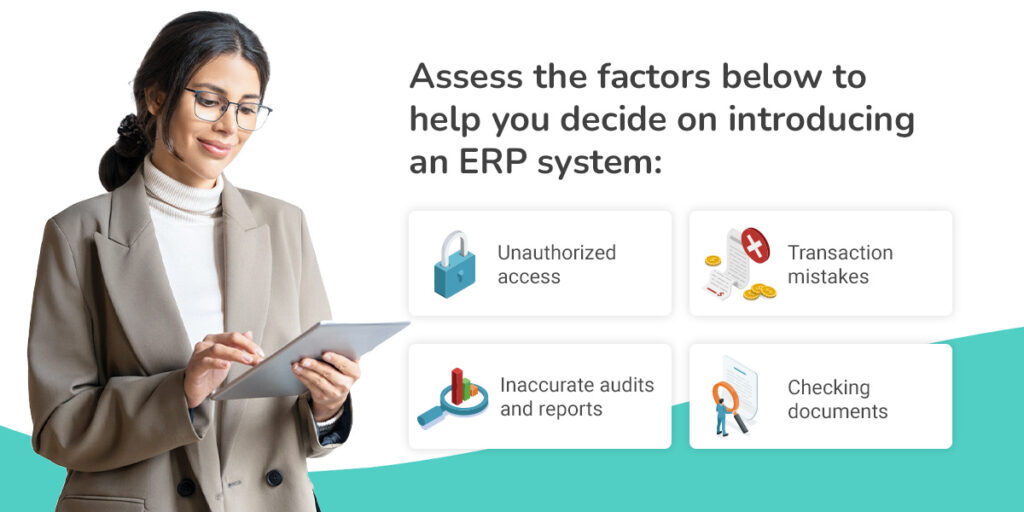
- Unauthorized access: Using a manual system with limited access controls exposes data to the risk of being viewed by unauthorized individuals. It is also challenging to safeguard and retrieve data after a system failure or security breach.
- Inaccurate audits and reports: Managing your company’s finances manually can lead to errors in recordkeeping. Inaccuracies with recordkeeping can potentially result in legal disputes and fines. With ERP automation, you produce accurate reports for audit.
- Transaction mistakes: Manual errors, such as typos or miscalculations, can lead to significant reporting issues. Misreporting can lead to fines and other legal consequences.
- Checking documents: Manually reviewing documents, such as financial statements, is time-consuming and may lead to compliance issues if errors occur.
4 benefits of automated financial management systems
Introducing automation to financial management is an excellent way to consolidate tasks and prioritize other duties. Here are the four benefits of introducing financial automation to your business operations:
1. Reduces costly human errors
Accurate financial reporting is essential for any business. Minor human errors, including the misplacement of a decimal point or the use of incorrect figures, can have significant consequences. With an ERP financial management system in place, your team can dramatically reduce the likelihood of human errors. You receive accurate and precise information every time.
2. Automated financial management compliance
The accuracy of financial reporting is crucial for audits and maintaining correct records. Automation in ERP finance streamlines the typically time-consuming process of financial reporting, making it quick and efficient. Particularly when a deadline is approaching for submitting financial reports, automation helps you meet these deadlines with ease.
3. Data-driven decision-making
With accurate and efficient financial data, you are freed up to focus on other essential projects instead of monotonous tasks. Quick reporting with precision allows you to make well-informed decisions based on the data. From the reporting, you can also work on setting future goals and objectives for your business to keep growing.
4. Improves data security
Protecting sensitive data and information from unauthorized access is a crucial benefit of blending ERP and business processes. With an automated ERP system, you can minimize the risk of data breaches and financial information loss. Because financial data is encrypted, you can safely transfer and store information with confidence.
How to choose the right ERP financial management system
Exploring various ERP financial management solutions for your business requires an understanding of your goals and objectives, as well as what you aim to achieve. Whether you need to upgrade your ERP or are new to ERP systems, consider the following points to guide you in selecting the right system:
- Real-time data and reporting: Search for ERP systems with customized dashboards that provide valuable financial data. Real-time insights offer the opportunity to make well-informed decisions.
- Seamless integration: Ensure you consider your existing financial tools and how the ERP technology will integrate with these systems. Compatibility between all platforms allows accuracy without the need for manual management.
- User-friendly technology: To minimize the need for training on technology, look for ERP systems that are intuitive and easy to use. Easy-to-use technology enables your team to feel confident in leveraging ERP systems.
- Flexibility and growth: If your goal is to continue development, choose an ERP system that supports this growth and is adaptable to your needs.
- Compliance and data protection: An ERP system with built-in security and data protection safeguards sensitive information and complies with relevant financial regulations.
Streamline financial management processes with ArcherPoint by Cherry Bekaert
With over 23 years of experience across 14 countries, our team delivers an industry-leading ERP solution that leverages cloud technology, enabling you to make informed decisions. Microsoft Dynamics 365 Business Central prioritizes business intelligence, productivity, and collaboration tools to help your business thrive.
Accuracy and efficiency are the key results of incorporating our powerful technology. The user-friendly dashboard enables departments to share and access data while also effectively managing income and expenses. You also gain the ability to review insightful data about your company’s finances to create objectives and forecasts for growth.
Ready to introduce automation to your financial management processes? Get in touch today to speak with an expert about your business needs.

Trending Posts
- Login Error: Communication protocol mismatch between client and server
- How to Make Measures Total Correctly in Power BI Tables
- The Microsoft Technology Stack – What Is It & Why Should You Care?
- MRP vs. MPS: Choosing the Right Planning Approach for Your Manufacturing Business
- Designing a Connected Student Engagement Technology Stack
Stay Informed
Subscribe to Communications
"*required" indicates required fields