
Sustainability Through ERP: Reducing Waste and Improving Efficiency

Sustainability is a top priority for modern businesses, driven by environmental concerns, regulatory requirements, and stakeholder expectations. Enterprise resource planning (ERP) systems are powerful tools that help organizations streamline operations, reduce waste, and improve efficiency. This article explores how ERP can support sustainable solutions for businesses as they journey toward a more sustainable and efficient future.
Why sustainability matters in modern business
Sustainability isn’t just a buzzword anymore — it’s a business imperative. Many companies are making significant progress toward their sustainability goals and targets. Businesses are expected to minimize their environmental impact, use resources wisely, and operate transparently. Here’s a breakdown of why it matters:
1. Environmental, Social, and Governance (ESG)
ESG criteria are becoming a part of business strategy. Governments and industry bodies are introducing stricter regulations, and companies must report on their sustainability efforts. Noncompliance can result in fines, legal action, and loss of business opportunities.
2. Stakeholders demand sustainable practices
Sustainable business practices are now a key factor in investment decisions, with many investors using ESG ratings to guide their portfolios. Customers are more likely to support brands that align with their values. Around 92% of buyers trust brands that are environmentally or socially responsible, while 85% of consumers globally are making more sustainable purchases than they were in 2019. Increasingly, employees also prefer to work for organizations with a clear commitment to social and environmental responsibility.
3. Improved brand reputation and access to new markets
Sustainable practices, including sustainable manufacturing, distribution, and supply chain sustainability, can differentiate a business from its competitors, attract new customers, and open doors to partnerships and markets that prioritize green credentials.
4. Operational efficiency and cost savings
Sustainable practices often reduce energy consumption, decrease waste, and use resources more efficiently, which can lower operating costs and improve profitability. Many companies implement strategies to cut costs and increase efficiency, and expect increased revenue from their sustainability efforts.
5. Risk management and resilience
By proactively addressing environmental and social risks, companies can better anticipate and adapt to regulatory changes, supply chain disruptions, and shifting market demands.
6. Innovation and long-term growth
Focusing on sustainable solutions for businesses encourages innovation in products, services, and business models, positioning companies for long-term success in a quickly changing world.
7. Global alignment with Sustainable Development Goals (SDGs)
Many organizations are aligning their strategies with the United Nations’ Sustainable Development Goals, demonstrating their commitment to global priorities like climate action, responsible consumption, and inclusive growth.
Use of ERP for sustainable operations
ERP systems are integrated software platforms that connect all core business functions, from finance and a sustainable supply chain to human resources. They are crucial to sustainable solutions for businesses in the following ways:
- Resource optimization: ERPs help businesses track resource usage, such as materials, energy, and labor, in real time, making it easier to identify inefficiencies and areas for improvement.
- Centralized data management: ERP systems collect and store data from across the organization, providing a single source of truth for decision-making.
- Process automation: ERPs automate routine tasks, reducing manual errors, saving time, and freeing staff to focus on higher-value activities.
Ways ERP reduces waste and improves efficiency
The latest modern ERP systems offer several features that directly support sustainability and efficiency goals.
Real-time resource tracking
ERPs monitor inventory levels and movement, helping companies avoid overstocking or stockouts, which reduces waste. Some ERPs track energy consumption across facilities, allowing businesses to pinpoint high-usage areas and implement energy-saving measures.
Automated process optimization
The system can use data to optimize production schedules, reducing overproduction and minimizing waste. By integrating supplier and logistics data, ERPs help companies source materials more sustainably and reduce transportation emissions. Shipping routes can be optimized, reducing fuel consumption and consolidating orders. Optimization contributes to more sustainable distribution and transportation practices.
Data-driven decision-making
ERPs provide dashboards and reports that highlight inefficiencies, enabling growth and continuous improvement. Automated data collection and reporting also make it easier to comply with regulations and share progress with stakeholders.
Integrating sustainability metrics into your ERP
To fully leverage ERP for sustainability, organizations must integrate relevant metrics and reporting tools to:
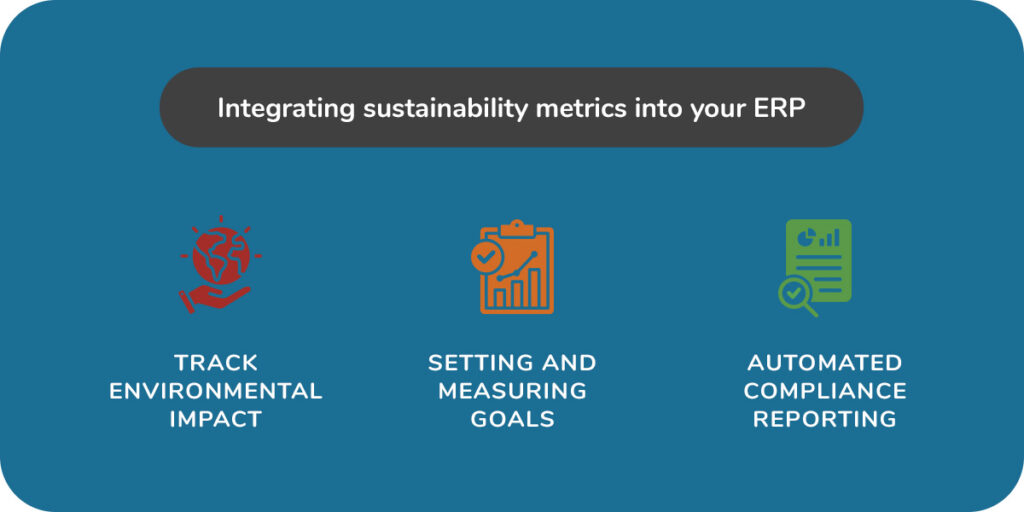
Track environmental impact: ERPs can monitor carbon emissions, water usage, and waste generation, providing actionable insights for sustainability initiatives.
Setting and measuring goals: Businesses can set specific sustainability targets — for example, reducing energy use by 10% — and use ERP data to track progress.
Automated compliance reporting: ERPs simplify gathering and submitting data required by regulators or industry standards.
Overcoming common challenges in sustainable ERP adoption
Implementing ERP to support sustainability can present challenges, but these can be managed with the right approach.
- Change management: Employees sometimes resist new systems or processes. Clear communication and training are essential. Involve key stakeholders early in the process, provide hands-on demonstrations, and highlight the new system’s benefits for the organization and individual roles. Leadership buy-in and visible support can also help drive cultural change.
- Data silos: Integrating data from different departments or legacy systems can be complex. A phased approach and expert support are crucial. Before implementation, run a data audit to find gaps and inconsistencies. Use data migration tools and establish clear data governance policies to maintain data quality and consistency across the organization.
- User adoption: Ensure all users understand and use the ERP’s sustainability features to maximize the system’s value. Offer ongoing training and user-friendly documentation, and set up a support network or “super user” group to help colleagues. Encourage feedback and keep improving the system based on user input.
- Customization and scalability: Off-the-shelf ERP solutions may not fully align with your sustainability goals or industry requirements. Work with your ERP provider or consultant to customize modules and reports as needed. Choose a scalable solution that can adapt as your sustainability strategy evolves.
- Cost and resource allocation: Implementing or upgrading an ERP system is an investment in time, money, and personnel. Build a business case that quantifies the long-term value of sustainability-driven ERP adoption, including potential cost savings, risk reduction, and compliance benefits. Consider phased rollouts to spread costs and minimize disruption.
- Measuring and reporting sustainability outcomes: Defining the right metrics and ensuring accurate data collection can be challenging. Collaborate with sustainability experts to identify relevant metrics, and use ERP analytics and dashboards to track progress and generate actionable insights.
- Maintaining momentum: Initial enthusiasm can wear off after go-live. To maintain engagement and drive continuous improvement, set up regular reviews, celebrate quick wins, and keep sustainability goals visible.
How ArcherPoint supports sustainable digital transformation
Partnering with an experienced consultant can make your ERP sustainability journey smoother and more effective. ArcherPoint specializes in helping organizations select, implement, and optimize ERP systems for sustainability. We work with you to discover your unique sustainability goals and configure your ERP to support them. From training to troubleshooting, we ensure your team gets the most from your ERP investment.
Ready to use ERP for sustainability efficiency? Contact us today for a personalized assessment and roadmap for sustainable digital transformation.
Trending Posts
Stay Informed
Choose Your Preferences
"*required" indicates required fields