
Improve Efficiency and Guest Experience with these Must-Have Features in Modern Restaurant POS Software
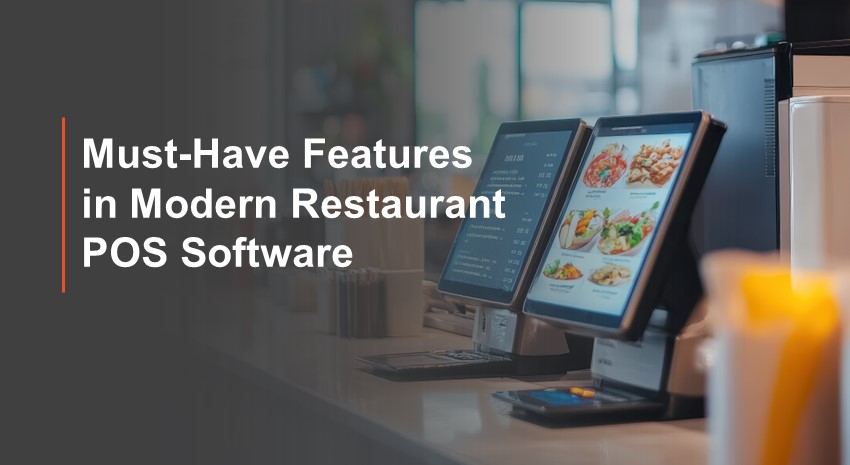
The role of restaurant point-of-sale (POS) software has evolved dramatically. What was once simply a payment processing tool is now the operational command center that connects ordering, kitchen workflows, guest engagement, inventory, analytics, and financial reporting.
Restaurants that rely on outdated POS systems often experience slower service, operational inefficiencies, and limited visibility into performance. In contrast, modern restaurant POS software helps businesses streamline operations, improve guest experiences, and adapt to changing dining trends.
If you are evaluating restaurant POS software, here are the critical features your system should include.
Real-time order coordination between front and back of house
Clear and accurate communication between service staff and kitchen teams is essential for consistent service quality. When orders are transmitted manually or through disconnected systems, mistakes become more common, particularly during peak hours.
Modern restaurant POS systems eliminate communication gaps by automatically sending orders from any ordering channel directly to kitchen workflows. Whether an order originates from a dining room server, online ordering platform, or self-service kiosk, it should seamlessly route to the correct kitchen station.
This real-time order coordination helps ensure preparation accuracy, improves timing between courses, and allows staff to monitor order progress. By synchronizing front-of-house and back-of-house operations, restaurants can reduce errors, shorten service times, and improve guest satisfaction.
Unified guest profiles and personalization capabilities
Customer expectations continue to evolve, and personalization has become a major differentiator for restaurants. Modern restaurant POS software enables operators to build comprehensive guest profiles by consolidating customer data into a single system.
With centralized guest information, restaurants can track preferences, dining history, dietary restrictions, and special occasions. Staff can use this insight to deliver more personalized services, while marketing teams can design targeted promotions that strengthen customer loyalty.
This level of guest intelligence allows restaurants to move beyond transactional interactions and create memorable dining experiences that encourage repeat visits and stronger brand loyalty.
Built-in inventory and recipe intelligence
Inventory management plays a critical role in profitability and operational efficiency. Restaurants without accurate inventory visibility risk running out of popular menu items, over-purchasing ingredients, or generating unnecessary waste.
Modern POS systems integrate inventory tracking directly into the order lifecycle. When a dish is sold, ingredient quantities are automatically adjusted according to standardized recipe configurations. This real-time inventory visibility allows restaurant operators to make better purchasing decisions and maintain consistent menu availability.
Recipe management features also improve cost control and food consistency. Standardized portioning helps maintain quality across shifts and locations, while allergen tracking capabilities help protect guest safety and support regulatory compliance.
Flexible ordering across multiple channels
Today’s diners expect convenience and flexibility when placing orders. Whether ordering from a mobile device, a self-service kiosk, or a tableside tablet, customers want a seamless experience that lets them easily customize menu items.
A modern restaurant POS system should serve as the central hub for all ordering channels. By managing menus, pricing, and item availability from a single platform, restaurants can maintain consistency across online ordering, in-person service, and delivery operations.
Unified ordering technology improves operational efficiency by reducing manual data entry, minimizing errors, and providing staff with a complete view of incoming orders. It also gives restaurants the flexibility to introduce new service models as customer expectations evolve.
Centralized menu and multi-location management
Restaurants with multiple locations often face challenges in maintaining consistency while adapting to local preferences. Modern POS software enables operators to centrally manage menus, promotions, and pricing while still supporting location-specific customization.
This centralized management approach ensures brand consistency and reduces administrative complexity. Updates to menu items or pricing can be deployed across multiple locations simultaneously, helping restaurants respond quickly to seasonal ingredients, regional preferences, or promotional campaigns.
For restaurant groups operating across geographic regions, multi-language and multi-currency capabilities are essential for supporting global expansion while maintaining operational standards.
Cloud-based architecture and continuous innovation
Cloud-based restaurant POS systems offer greater flexibility, scalability, and enhanced security over traditional on-premises solutions. Automatic updates ensure restaurants always have access to the latest features without requiring manual system upgrades.
Cloud architecture also enables remote access to operational data, allowing restaurant owners and managers to monitor performance from any location. As businesses expand or introduce new service offerings, cloud POS systems provide the scalability needed to support long-term growth.
Additionally, cloud platforms simplify integration with other business applications, including accounting, analytics, and customer engagement tools, creating a unified technology ecosystem.
Reservation, table, and guest flow management
Efficient seating and guest flow directly impact restaurant profitability and customer satisfaction. Modern POS systems often include integrated reservation and table management tools that provide real-time visibility into seating availability.
Hosts and managers can track reservations, manage waitlists, and coordinate seating assignments through a centralized interface. Staff can also capture guest preferences and special requests, helping deliver more personalized service.
By aligning reservation management with kitchen capacity and staffing levels, restaurants can optimize table turnover, reduce wait times, and maintain smoother service operations during peak dining periods.
Ease of use and faster employee training
Restaurant environments often experience high staff turnover, making training efficiency a major operational priority. Complicated or nonintuitive POS systems can slow onboarding, increase errors, and frustrate employees.
Modern restaurant POS software should be designed with usability in mind. Intuitive interfaces, role-based dashboards, and guided workflows allow employees to learn the system quickly and perform tasks with confidence. Simplified navigation reduces the risk of order-entry errors and helps new staff become productive faster.
Some advanced POS platforms also offer built-in training tools, digital prompts, and standardized workflows to reinforce best practices. By reducing training time and improving staff confidence, restaurants can improve service consistency and reduce operational disruptions.
Choosing restaurant POS software that supports growth
Restaurant POS technology should support both daily operations and long-term strategic goals. A modern restaurant POS system connects operational data, streamlines workflows, and provides valuable business insights that help operators make informed decisions.
When selecting restaurant POS software, businesses should focus on scalability, integration capabilities, and ease of use. A future-ready solution helps restaurants adapt to changing customer expectations, expand into new markets, and introduce new service models without replacing core systems.
Why restaurants choose ArcherPoint for their POS and business management solutions
Selecting the right restaurant POS software is only part of the equation. Successful implementation requires a partner that understands restaurant operations, technology integration, and long-term business strategy.
ArcherPoint by Cherry Bekaert helps restaurants modernize operations by implementing and optimizing restaurant management and POS solutions that connect ordering, inventory, customer engagement, and financial systems into a unified platform. Their team works closely with restaurant operators to evaluate current workflows, recommend scalable technology solutions, and support successful system adoption.
Whether restaurants are upgrading outdated POS software, expanding into new locations, or enhancing customer engagement strategies, ArcherPoint provides the expertise and support needed to help restaurants operate more efficiently and deliver exceptional guest experiences.
Ready to modernize your restaurant technology? Contact ArcherPoint by Cherry Bekaert to learn more about how modern POS solutions can support your restaurant’s growth.
Trending Posts
- Login Error: Communication protocol mismatch between client and server
- How to Make Measures Total Correctly in Power BI Tables
- The Microsoft Technology Stack – What Is It & Why Should You Care?
- MRP vs. MPS: Choosing the Right Planning Approach for Your Manufacturing Business
- Creating a Date Table in Power BI
Stay Informed
Choose Your Preferences
"*required" indicates required fields